Would you like to arrange a meeting? Contact us through our website.
Series · 1 of 4
A portfolio brings together very different relationships. This video explains why a generic retention strategy is not enough and how to decide what each relationship needs.
In this video
- Each relationship is at a different moment: some customers are still discovering the offer, others could expand the relationship and others are drifting away.
- Customer Lifetime Value provides an economic reference: the contribution we can expect from a relationship over time.
- Two related dimensions: extending the relationship and expanding the value it generates.
- The situation sets the objective —activation, development, retention, protection when there are risk signals, or recovery— and value and opportunity help decide where to invest.
- Radar combines purchase history, an estimate of future value and business context, and together with your team turns it into a targeting plan.
Transcript
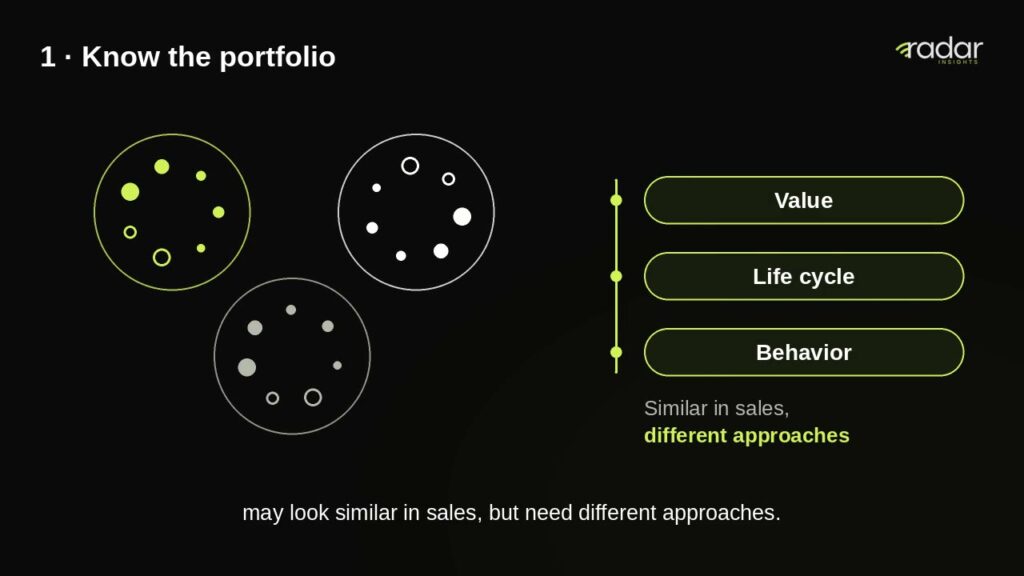
Every company decides where to invest in order to grow. Part of the effort aims to attract new customers. Another part tries to get customers who already bought to come back. But a portfolio brings together very different relationships. Some customers are still discovering the offer, others could expand their relationship, and others are drifting away because of an experience we need to understand.
A generic retention strategy can overlook those differences: offering incentives where they add little, leaving a friction point unresolved, or failing to recognize a development opportunity. The challenge is to decide what each relationship needs and where investment can generate more value, for the customer and for the company.
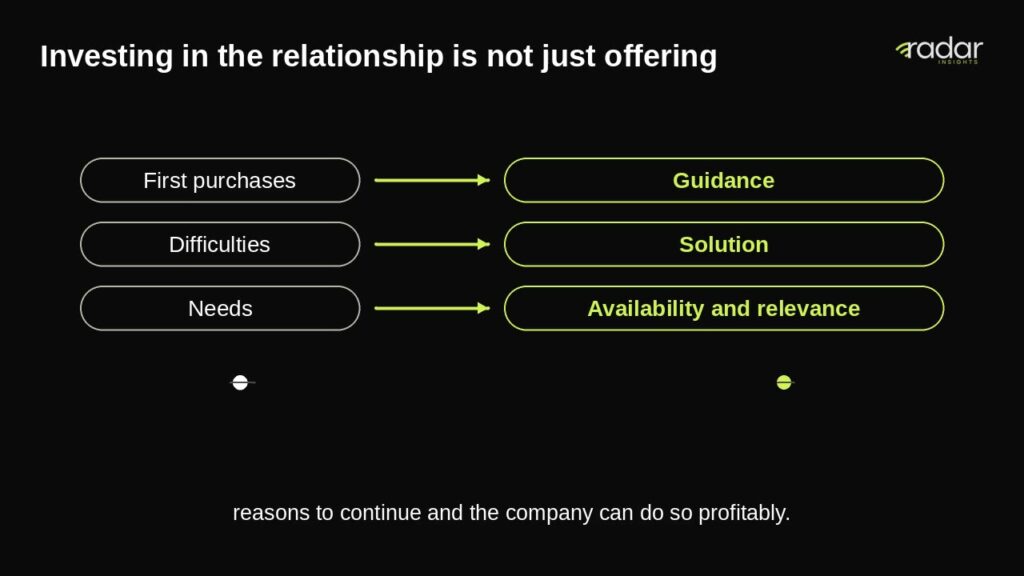
Customer Lifetime Value provides an economic reference to guide those decisions: the contribution we can expect from a relationship over time. We can work along two related dimensions: extending the relationship and expanding the value it generates. Giving reasons to keep buying and meeting relevant needs throughout that continuity.
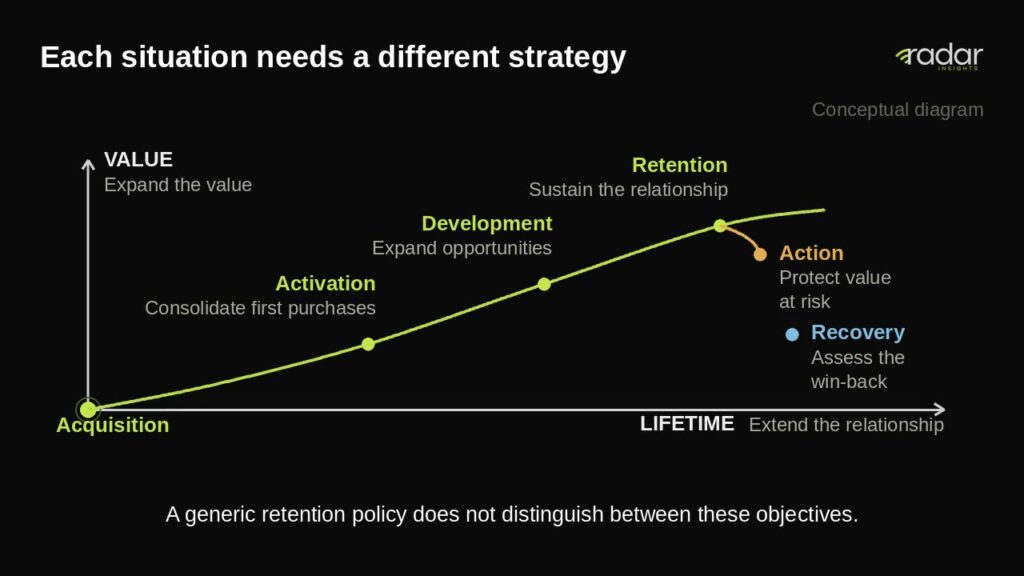
Acquisition brings new relationships into the portfolio; the challenge is to build their value after the first purchase. A recent relationship needs activation. A relationship with opportunities can be developed. An established relationship requires retention. Facing risk signals, we need to act to protect value. And when a customer becomes inactive, it is appropriate to evaluate their recovery.
A generic retention policy does not distinguish between these objectives. Some customers consolidate the relationship. Others stop buying during the early stages. Nor do they all represent the same value or the same opportunities. That is why the situation guides the objective, while value and opportunity help decide where to concentrate investment.
Radar combines purchase history, the estimate of future value, and the business context to understand each relationship. A methodology of scores and analysis makes it possible to organize that reading and learn what distinguishes the highest value customers. Together with your team, we turn it into a targeting plan: which customers to prioritize, with what objective, and which actions to propose. Radar Insights.
Where Data Becomes Strategy.
Where does your portfolio need more attention?
If these ideas apply to your business, let’s talk.
Request an introductory presentation